How to Communicate with Someone Living with Dementia
Effective communication strategies that reduce frustration and strengthen your bond with your loved one.
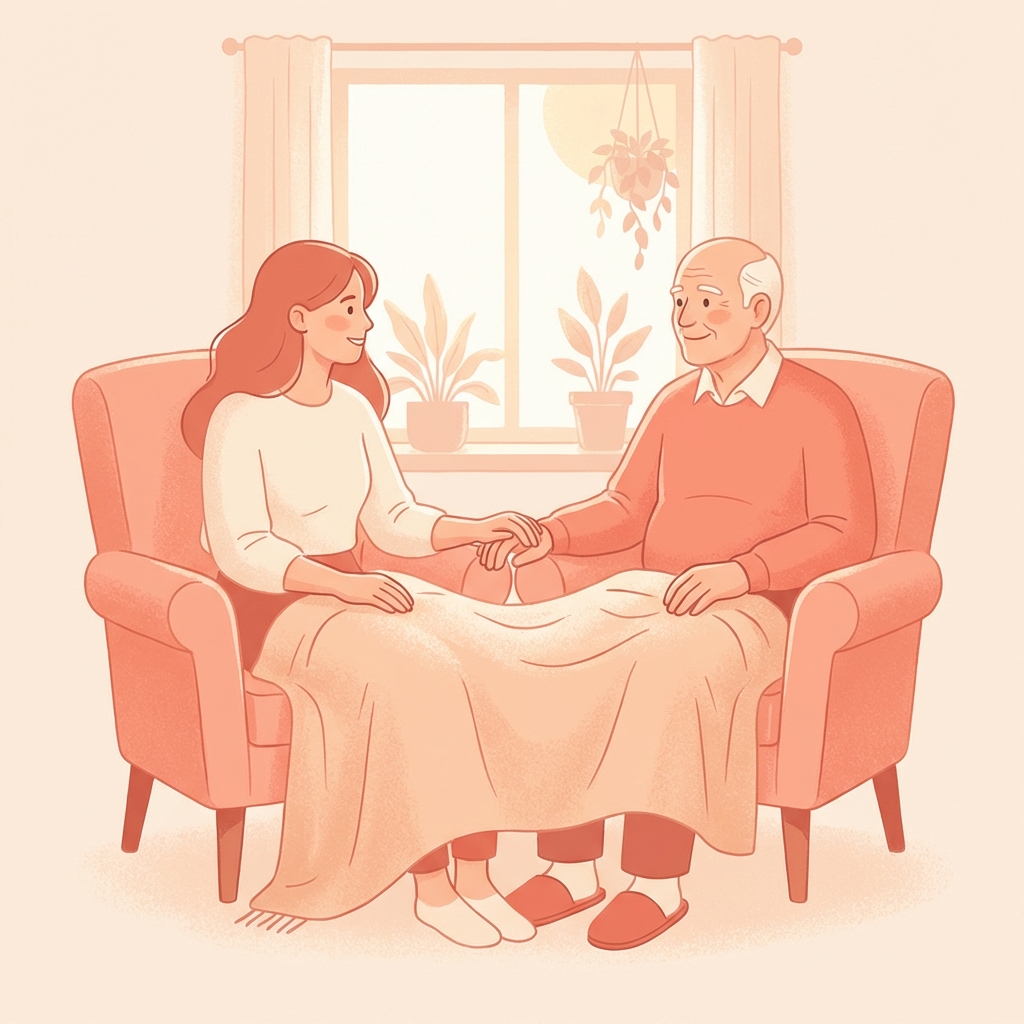
Why Communication Changes with Dementia
Dementia affects the brain's language centers, making it increasingly difficult to find words, follow conversations, and express thoughts. Understanding these changes helps you adapt your communication style.
Essential Communication Strategies
1. Approach from the Front
Always approach your loved one from the front so they can see you coming. Sudden appearances can be startling and confusing.
2. Use Their Name
Begin conversations by saying their name. This helps them focus and know you're speaking to them.
3. Speak Slowly and Clearly
Use simple sentences. Pause between thoughts. Give them time to process.
4. Ask One Question at a Time
Instead of "Do you want tea or coffee, and would you like a cookie with that?" try "Would you like tea?"
5. Use Visual Cues
Show objects while talking about them. Point to the sweater while asking if they want to wear it.
6. Avoid Arguing or Correcting
If they say something incorrect, don't argue. Enter their reality rather than forcing yours.
7. Use Yes/No Questions
Open-ended questions can be overwhelming. "Would you like to go outside?" is easier than "What do you want to do?"
8. Watch Body Language
Maintain eye contact. Smile. Use a calm, warm tone. Non-verbal communication matters more as verbal abilities decline.
9. Be Patient
Wait for responses. Silence is okay. Rushing creates anxiety.
10. End on a Positive Note
Even difficult conversations should conclude warmly.
How Technology Can Help
Voice messages are powerful for dementia care because:
**Carelu** makes voice communication effortless:
Ready to make caregiving easier?
Join thousands of families using Carelu to stay connected with their loved ones.
Get Started Free →